Dr. Nina Savelle-Rocklin

Exploring the Impact of Emotions on Eating Habits

Table of Contents
- The #1 Reason You Can’t Stay Out of the Kitchen
- How Emotions Influence Eating Behavior
- Why Food Feels Comforting
- Distinguishing Emotional Hunger from Physical Hunger
- The Psychology Behind Emotional Eating
- How to Break the Emotional Eating Cycle
- The Cultural Side of Emotional Eating
- A Healthier Relationship with Food
- Final Thoughts
- Frequently Asked Questions on the impact of Emotions on Eating Habits
The #1 Reason You Can’t Stay Out of the Kitchen
You tell yourself you’re not hungry. You’ve eaten dinner, maybe even dessert, but somehow, you’re standing in front of the fridge, searching for something. You promise this is the last bite, the last night, the last time. But it never is.
That’s because what’s pulling you back to the kitchen isn’t hunger. Beneath every late-night craving, every “I’ll start tomorrow,” is something deeper.
It’s not what you’re eating that’s the real problem, but what’s eating at you.
How Emotions Influence Eating Behavior
Almost everyone has reached for food during times of stress, sadness, or even joy. Unlike physical hunger, which arises gradually and can be satisfied with many different foods, emotional hunger comes on suddenly and you crave something specific, usually foods that soothe, comfort, or distract.
Emotional eating is any time we eat to change how we emotionally feel rather than a response to physical hunger. It can range from having a cookie after a stressful meeting to binge eating large quantities of food in a way that feels uncontrollable.
Whether it’s stress eating or binge eating, there is a powerful impact of emotions on eating habits.
Why Food Feels Comforting
Food is deeply symbolic. From infancy, being fed is linked with being loved, held, and cared for. This early association between food and emotional safety stays with us.
As adults, we continue to associate food with feelings: we celebrate with cake and reach for comfort foods like ice cream or pasta when life feels hard. When love, safety, or comfort feel out of reach, food becomes a reliable stand-in—always available, never rejecting, and immediately soothing.
The problem is that while food can comfort temporarily, it can’t address what we truly need, which has nothing to do with what’s on our plate or in the pantry.
Distinguishing Emotional Hunger from Physical Hunger
Learning to tell the difference between emotional and physical hunger is central to changing your eating patterns.
Physical hunger develops gradually, can be satisfied with various foods, and stops when you’re full.
Emotional hunger appears suddenly, feels urgent, and usually centers around specific comfort foods. You may keep eating after you’re full and feel guilt and shame afterward.
Recognizing this distinction between physical and emotional hunger helps you pause and ask, What am I really hungry for? Maybe it’s rest, reassurance, connection, or comfort, which food cannot provide.
The Psychology Behind Emotional Eating
The impact of emotions on eating habits isn’t random, but is rooted in how we learned to cope. Many of us eat as a way to manage feelings that are too painful, unacceptable, or overwhelming to face directly.
For example:
- Anger may feel scary, so we eat and take that anger out on ourselves for what we ate or what we weigh.
- Loneliness can trigger cravings for filling foods that symbolically fill the emptiness within.
- Sadness creates a longing for foods that are associated with comfort.
Food becomes a tool for emotional regulation, and serves as a way to soothe, silence, or substitute for feelings we may not want to express.
How to Break the Emotional Eating Cycle
Once you understand the emotional function of emotional eating, you can begin to develop healthier ways of coping. Here are five steps to start shifting your relationship with food and yourself:
- Recognize Your Emotional Triggers
Notice when and why you turn to food. Keep a brief food-and-mood journal to connect what you’re eating with how you’re feeling. Awareness creates choice, and choice creates change. - Name What You Feel
Before eating, ask yourself: “What emotion am I experiencing right now?” Naming it (“I’m anxious,” “I’m lonely,” or “I feel unappreciated”) helps you move from reacting to reflecting. - Express, Don’t Suppress
Unspoken emotions don’t disappear; they get displaced, often into eating. Instead of silencing feelings, give them words. For example: “I feel hurt that no one noticed my effort,” or “I’m angry that I keep saying yes when I want to say no.” Putting emotions into language reduces their intensity and makes food less necessary as an outlet. - Soothe Yourself with Words, Not Food
True self-soothing doesn’t come from taking a bubble bath, taking a walk, or other such distractions. It comes from comforting yourself with compassionate language. Try saying, “It’s understandable that I feel this way,” or “I can care for myself through this.” When you respond to yourself with empathy, you don’t need food for comfort or distraction. - Practice Ongoing Self-Compassion
Making peace with food isn’t about willpower, it’s about kindness. When you slip, remind yourself that you’re learning. Every moment of awareness is progress. Treat yourself the way you’d treat someone you love.
The Cultural Side of Emotional Eating
Culture also amplifies the impact of emotions on eating habits. Advertising, media, and social messages teach us to associate food with pleasure, reward, or self-care. They communicate: “You deserve it,” “Treat yourself,” “Chocolate fixes everything.” These messages reinforce the idea that food is emotional medicine.
But real emotional nourishment comes from connection, creativity, rest, and purpose, not from what’s on your plate. When you cultivate those sources of satisfaction, your cravings naturally decrease.
A Healthier Relationship with Food
Healing from emotional eating or binge eating doesn’t mean eliminating comfort food or enjoying meals less. It means developing a deeper awareness of what drives your behavior so you can respond to your emotions directly, rather than through eating.
You can’t heal what you don’t understand, which is why understanding the emotional meaning behind your cravings allows you to transform them. When you listen to what your feelings are trying to tell you, food becomes one source of pleasure among many, not your only source of comfort.
Final Thoughts
Understanding the impact of emotions on eating habits helps you stop blaming yourself and start listening to yourself. Food is not the enemy. It’s a solution to the true problem, and those are emotions that need your attention.
When you respond to your emotions with words instead of food, you don’t just change how you eat, you change how you live.
Frequently Asked Questions on the impact of Emotions on Eating Habits
What emotions most often lead to emotional eating?
Stress, loneliness, boredom, anxiety, and sadness are common triggers to emotional eating. But celebration can also lead to overeating when food becomes the default way to enhance joy or connection.
How can I tell if my hunger is emotional?
Emotional hunger comes on suddenly, demands specific foods, and continues even after you’re physically full. It’s driven by feelings rather than true body needs.
Is emotional eating always a bad thing?
Not necessarily. Occasionally eating for comfort is part of being human. The problem arises when food becomes your main way of coping, leading to guilt, shame, or loss of control.
Can dieting increase emotional eating?
Yes. Restrictive eating heightens deprivation and can trigger emotional distress, which makes food even more appealing as comfort. That’s why healing involves freedom, not restriction.
What’s the first step toward healing emotional eating?
Start by noticing your patterns with compassion, not criticism. Ask, “What am I feeling right now?” and “What do I truly need?” When you meet your emotional needs directly, food no longer has to do that job.
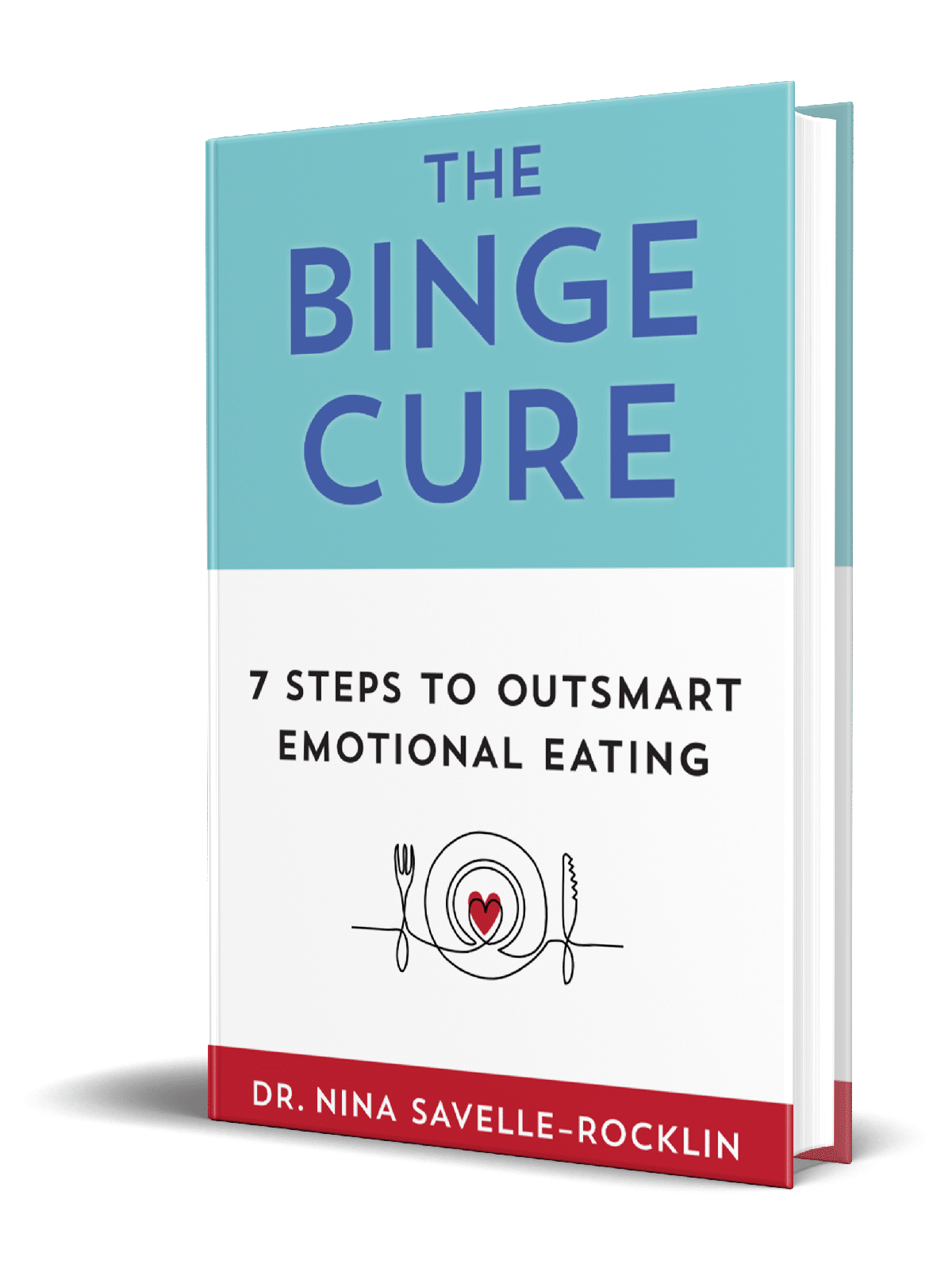
Sick of obsessing about every bite?
GET THE CURE
The Binge Cure Book!
Enter “CURE” to receive a 20% discount.
No, I don’t want access to this terrific resource to help me overcome binge eating.
The Author

Dr. Nina Savelle-Rocklin is a renowned author and podcast host and one of the nation’s leading psychoanalysts known for the psychology of eating. Her signature message of, “It’s not what you’re eating, it’s what’s eating ‘at’ you” has resonated with hundreds of thousands of listeners from around the globe in 40 countries. As founder of The Binge Cure Method, she guides emotional eaters to create lasting food freedom so they can take back control of their lives and feel good in their bodies.
Related Blogs










 Free • 3 Minutes • Personalized Results