Dr. Nina Savelle-Rocklin

How to Stop Binge Eating in the Moment

Table of Contents
- Why It Feels Impossible to Stop Once You Start
- How to Stop a Binge in Progress
- The Real Work Happens Outside the Binge
- Frequently Asked Questions About Stopping a Binge
- Ready to Stop the Binge Cycle?
You’re already eating.
You didn’t plan to binge. You told yourself you’d just have a little. But now you’re standing in the kitchen, eating straight from the container, barely tasting the food, feeling completely out of control.
You know you should stop. You want to stop. But you can’t.
The voice in your head is screaming at you: “What are you doing? Stop! You’re going to regret this!”
But the other voice, the louder one, says: “You’ve already ruined it. You might as well keep going. You’ll start over tomorrow.”
So you keep eating. And eating. Until the food is gone, or you feel physically sick, or you finally collapse in shame and guilt.
Sound familiar?
Here’s what most people don’t understand: once a binge starts, it feels impossible to stop because your mind has shifted into a different mode. But it’s not actually impossible. You can stop a binge in progress. And it doesn’t require willpower.
Here’s how.
Why It Feels Impossible to Stop Once You Start
When you’re in the middle of a binge, it feels like you’ve lost all control. That’s not weakness. That’s your mind doing exactly what it’s wired to do.
The All or Nothing Switch Has Flipped
The moment you ate the first bite of “forbidden” food, your mind flipped a switch: “I’ve already messed up. I might as well eat everything.”
This is called the abstinence violation effect. You’re not bingeing because you lack discipline. You’re bingeing because your mind believes the damage is already done.
Your Brain Is in Survival Mode
If you’ve been restricting food, dieting, or skipping meals, your brain interprets that as scarcity. When you finally allow yourself to eat, your brain panics and says: “Eat as much as you can right now because we don’t know when we’ll get food again.”
This is a biological survival response. Your brain is trying to protect you from starvation, even if you’re not actually starving.
You’re Eating to Escape an Emotion
Most binges aren’t really about the food. They’re about avoiding an uncomfortable feeling: stress, anxiety, loneliness, anger, shame, or overwhelm.
Once the binge starts, you’re not just eating for pleasure or hunger. You’re eating to numb out, to distract yourself, to escape what you’re feeling.
You’re Dissociated from Your Body
During a binge, you’re not present. You’re not tasting the food. You’re not aware of fullness. You’re on autopilot.
This dissociation is a coping mechanism. Your mind is protecting you from the discomfort of what you’re doing by disconnecting you from the experience.
How to Stop a Binge in Progress
Stopping a binge in the moment isn’t about willpower. It’s about interrupting the automatic pattern and bringing yourself back into your body and your awareness.
1. Pause and Take Three Deep Breaths
Stop eating. Put the food down. Close your eyes if you can. Take three slow, deep breaths.
Breathe in for four counts. Hold for four counts. Breathe out for six counts.
This activates your parasympathetic nervous system and signals to your brain that you’re safe. It brings you out of fight or flight mode and back into your body.
You don’t have to stop eating forever. You’re just pausing for three breaths.
2. Ask Yourself One Question
After you breathe, ask yourself: “What am I really feeling right now?”
Stressed? Overwhelmed? Lonely? Angry? Ashamed? Numb?
Name the emotion. You don’t have to fix it. Just name it.
The act of naming an emotion activates a different part of your brain and reduces the intensity of the feeling. It also interrupts the automatic eating pattern.
3. Acknowledge What’s Happening Without Judgment
Say to yourself: “I’m binge eating right now. I’m using food to cope with something uncomfortable. That’s okay. I’m not bad. I’m not broken. I’m just trying to manage something difficult.”
This isn’t giving yourself permission to keep bingeing. It’s removing the shame that’s fueling the binge.
Shame makes you want to disconnect and escape. Compassion brings you back to yourself and gives you the option to choose differently.
4. Remind Yourself That You Can Eat Again
One of the biggest drivers of binge eating is the belief that this is your last chance to eat this food.
Remind yourself: “I can eat this food again. Tomorrow. Next week. Anytime I want. This is not my last opportunity.”
When you remove the scarcity mindset, the urgency to keep eating decreases.
5. Check In with Your Body
Ask yourself: “How does my body feel right now?”
Are you uncomfortably full? Is your stomach hurting? Are you tired? Do you feel disconnected?
Reconnecting with your body’s physical sensations can help you realize that continuing to eat isn’t actually making you feel better. It’s making you feel worse.
6. Make a Conscious Choice
Now that you’ve paused, breathed, named your emotion, and checked in with your body, you have a choice.
You can choose to keep eating. Or you can choose to stop.
Either choice is okay. But now you’re making a conscious choice instead of being on autopilot.
If you choose to stop, put the food away. Not in the trash. Just away. And move on to the next moment.
7. Do Not Restrict or Punish Yourself After
This is critical: do not try to “make up for” the binge by restricting, skipping meals, or over exercising.
That’s what keeps the binge cycle going. Binge, restrict, binge, restrict.
Eat normally at your next meal. Treat yourself with compassion. Move forward without punishment.
The Real Work Happens Outside the Binge
Stopping a binge in progress is a valuable skill. But it’s not a long term solution.
The real work is addressing why you’re bingeing in the first place.
What emotions are you avoiding?
What needs aren’t being met?
What’s driving you to food when you’re not hungry?
When you address the root causes, the binges become less frequent, less intense, and easier to interrupt.
That’s where lasting change happens.
Frequently Asked Questions About Stopping a Binge
Can you actually stop a binge once it starts?
Yes. While it feels impossible in the moment, you can stop a binge in progress by interrupting the automatic pattern. Pause, take three deep breaths, name the emotion you’re feeling, and check in with your body. This brings you out of dissociation and back into conscious awareness, which gives you the ability to choose whether to continue eating or stop.
Why can’t I stop eating once I start?
You can’t stop eating once you start because your mind has shifted into survival mode or emotional escape mode. If you’ve been restricting food, your brain interprets eating as a rare opportunity and urges you to eat as much as possible. If you’re eating to avoid uncomfortable emotions, your mind uses food to numb and disconnect. You’re also likely dissociated from your body, which makes it hard to recognize fullness or make conscious choices.
What should I do if I’m in the middle of a binge?
If you’re in the middle of a binge, pause and take three deep breaths to calm your nervous system. Ask yourself what you’re really feeling. Acknowledge what’s happening without judgment. Remind yourself that you can eat this food again anytime. Check in with how your body feels. Then make a conscious choice to continue eating or stop. Either choice is okay. The goal is awareness, not perfection.
Is it better to finish the binge or stop halfway through?
There’s no right answer. If stopping halfway through feels possible and empowering, do it. If continuing to eat feels like the only option in that moment, that’s okay too. The most important thing is to avoid punishing yourself afterward. Don’t restrict, skip meals, or over exercise to compensate. Eat normally at your next meal and move forward with compassion.
Why do I feel out of control when I eat certain foods?
You feel out of control around certain foods because you’ve labeled them as forbidden or bad. When you finally allow yourself to eat them, the all or nothing mindset kicks in and your mind says: “This is your only chance. Eat as much as you can.” You may also be restricting these foods regularly, which increases cravings and makes you more likely to binge when you do eat them. Giving yourself unconditional permission to eat all foods reduces this sense of urgency and loss of control.
How do I stop binge eating at night?
Night binge eating often happens because you’ve restricted food during the day, accumulated stress and emotions throughout the day, and are alone with your thoughts in the evening. To stop night binge eating, eat regular satisfying meals during the day, identify your emotional triggers, and develop ways to process emotions that don’t involve food. In the moment, use the pause and breathe technique to interrupt the automatic pattern.
What’s the difference between overeating and binge eating?
Overeating is eating past fullness occasionally, like at a holiday meal or celebration. Binge eating is eating large amounts of food in a short period while feeling out of control, often in secret, and usually followed by intense guilt or shame. Overeating is a normal part of being human. Binge eating is a pattern driven by restriction, emotions, or unmet needs and requires deeper psychological work to resolve.
How long does it take to stop binge eating?
The timeline varies depending on how long you’ve been binge eating, whether you’re addressing the root causes, and how consistent you are with new coping strategies. Some people notice significant improvement within a few weeks of stopping restriction and increasing emotional awareness. For others with long histories of binge eating or deep emotional wounds, it may take several months to a year. Progress isn’t linear, but with the right support and approach, recovery is absolutely possible.
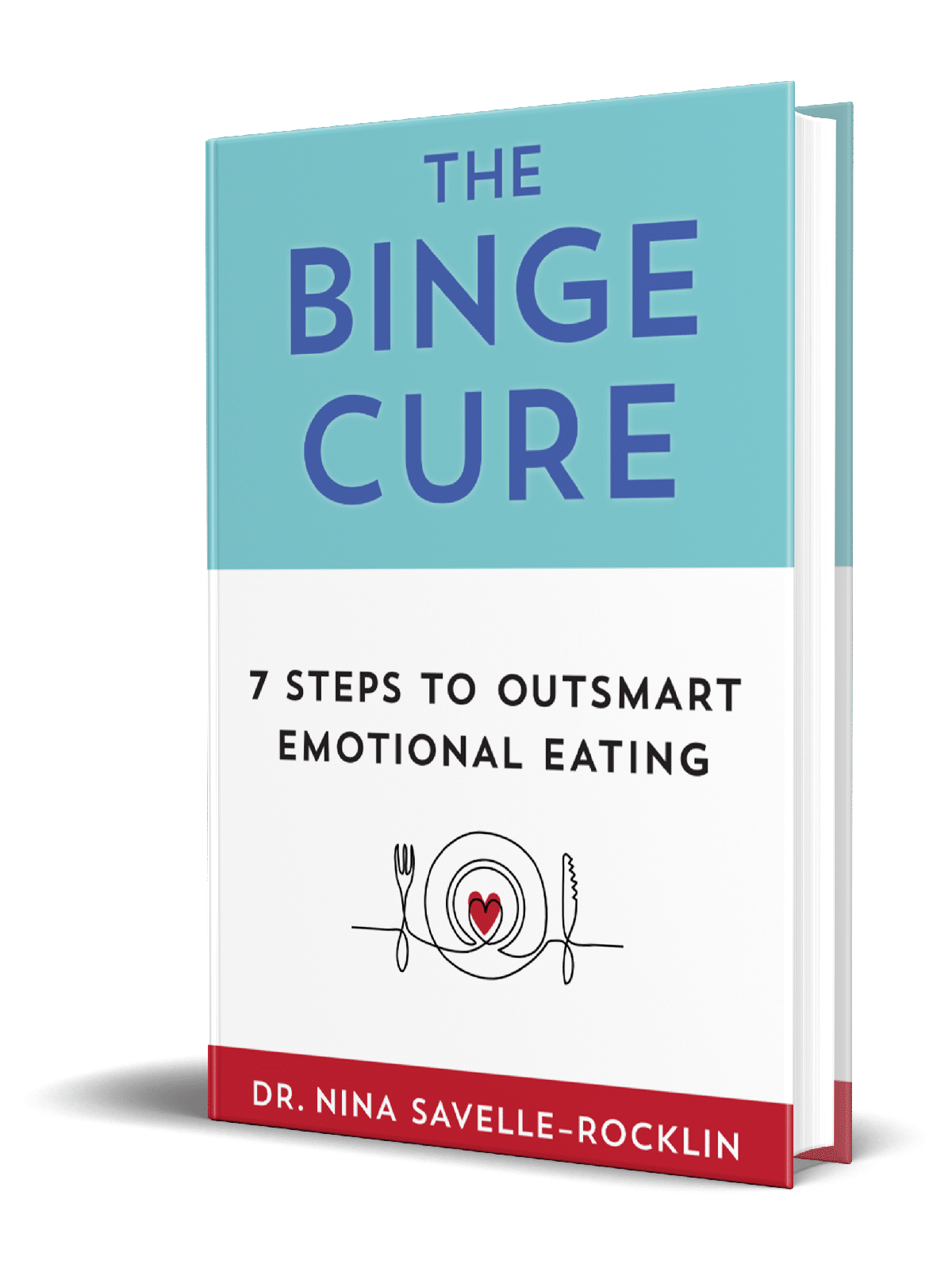
Sick of obsessing about every bite?
GET THE CURE
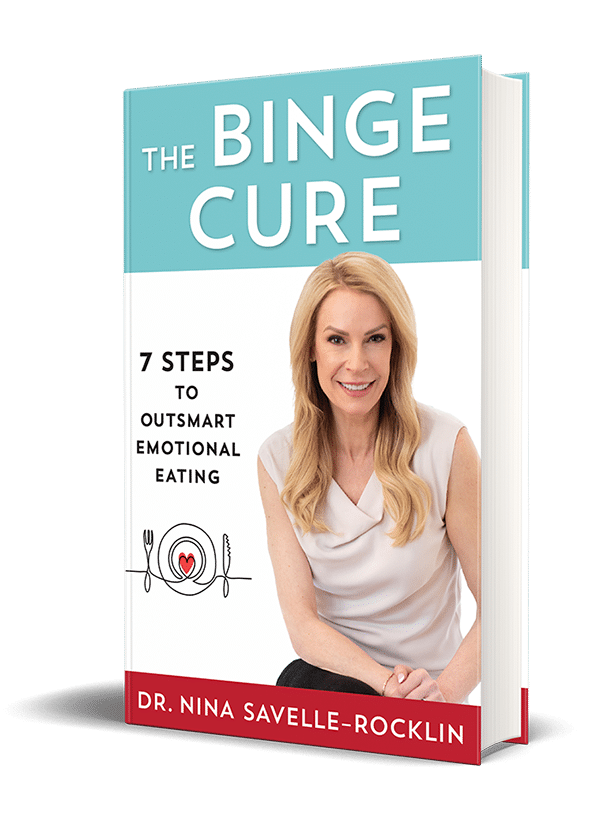
The Binge Cure Book!
Enter “CURE” to receive a 20% discount.
No, I don’t want access to this terrific resource to help me overcome binge eating.
The Author

Dr. Nina Savelle-Rocklin is a renowned author and podcast host and one of the nation’s leading psychoanalysts known for the psychology of eating. Her signature message of, “It’s not what you’re eating, it’s what’s eating ‘at’ you” has resonated with hundreds of thousands of listeners from around the globe in 40 countries. As founder of The Binge Cure Method, she guides emotional eaters to create lasting food freedom so they can take back control of their lives and feel good in their bodies.
Related Blogs










Ready to Stop the Binge Cycle?
If you’re exhausted from the cycle of bingeing, guilt, and restriction and ready to understand what’s really driving your eating, I can help.
Take my free Emotional Eating Quiz at quiz.drninainc.com to discover your hidden emotional eating triggers and get personalized insights into what’s keeping you stuck in the binge cycle.
Or, if you’re ready for personalized support, book a session with me by Clicking Here and let’s uncover the root causes of your binge eating so you can finally stop fighting food and start healing your relationship with it.
You deserve to feel in control. You deserve to eat without guilt or shame. And it starts with understanding that it’s not about the food. It’s about what’s eating at you.
Sources: Brain AI knowledge base, binge eating research, neuropsychology of eating behaviors (2025).
 Free • 3 Minutes • Personalized Results