Dr. Nina Savelle-Rocklin

Why Your New Year’s Diet Resolution Will Fail (And What to Do Instead)

Table of Contents
- Why New Year’s Diet Resolutions Fail
- The Real Problem with New Year’s Resolutions
- What to Do Instead of Making a Diet Resolution
- A Different Kind of New Year’s Intention
- Frequently Asked Questions About New Year's Diet Resolutions
- Ready to Start the New Year Differently?
It’s that time of year again.
The time when you promise yourself that this will be the year you finally get it together. The year you lose the weight, stop binge eating, and gain control over food once and for all.
You’re already planning it: January 1st, you’ll start fresh. You’ll eat clean. You’ll meal prep. You’ll cut out sugar, carbs, or whatever food you’ve decided is the problem. You’ll be disciplined. You’ll be different.
And for a few days, maybe even a few weeks, it works. You feel motivated. You feel in control. You feel hopeful.
But then something happens. You have a stressful day. You eat something you weren’t supposed to. You miss a workout. And suddenly, the resolution crumbles.
The guilt floods in. The shame takes over. And before you know it, you’re back to the same patterns you swore you’d leave behind.
Sound familiar?
If you’ve been through this cycle before—and if you’re already planning to go through it again this January—I want you to stop and ask yourself one question:
What if the problem isn’t your lack of willpower? What if the problem is the resolution itself?
Why New Year’s Diet Resolutions Fail
New Year’s diet resolutions fail because they’re built on a faulty foundation. They assume that the problem is what you’re eating. That if you just had more discipline, more control, more willpower, you’d be fine.
But that’s not how emotional eating, binge eating, or food obsession works.
Here’s why most New Year’s diet resolutions are doomed from the start:
1. They Focus on the Symptom, Not the Cause
When you resolve to “eat healthier” or “lose weight,” you’re addressing the surface behavior. You’re not addressing why you overeat in the first place.
If you’re eating to cope with stress, loneliness, anxiety, or unresolved emotions, no amount of meal planning will fix that. You’ll white-knuckle it for a while, but eventually, the underlying issue will pull you back to food.
2. They’re Rooted in Restriction
Most New Year’s resolutions are about cutting things out: no sugar, no carbs, no snacking, no “bad” foods.
But restriction doesn’t work. It triggers deprivation. Deprivation triggers cravings. Cravings trigger overeating. Overeating triggers guilt. And guilt triggers more restriction.
You’re not failing because you lack discipline. You’re failing because restriction is unsustainable.
3. They’re Fueled by Shame
New Year’s resolutions often come from a place of self-criticism: “I need to fix myself. I need to be better. I need to stop being so out of control.”
But shame is not a motivator. It’s a saboteur.
When you start a resolution from a place of shame, you’re setting yourself up for failure. Because the moment you slip up, the shame intensifies. And shame doesn’t inspire change—it drives you back to the very behavior you’re trying to stop.
4. They Ignore Your Emotional Needs
If you’re using food to manage emotions, a diet resolution won’t address that. You’ll still be stressed, lonely, overwhelmed, or anxious. You’ll just be trying to cope with those feelings without your usual coping mechanism.
And when the emotions become too much, you’ll reach for food again. Not because you’re weak, but because you haven’t learned another way to cope.
5. They Set You Up for the All-or-Nothing Trap
New Year’s resolutions are often rigid: “I’m going to eat perfectly. I’m going to work out every day. I’m going to follow the plan no matter what.”
But life isn’t perfect. You’ll have a bad day. You’ll eat something off-plan. You’ll skip a workout.
And when that happens, the all-or-nothing mindset kicks in: “I already messed up, so I might as well keep going. I’ll start over Monday.”
One slip becomes a full relapse. Not because you failed, but because the resolution was too rigid to allow for being human.
The Real Problem with New Year’s Resolutions
The real problem with New Year’s diet resolutions is that they treat food as the problem.
But food is not the problem. Food is the solution you’ve been using to cope with the real problem.
The real problem is the stress you’re carrying. The emotions you’re avoiding. The needs you’re not meeting. The wounds that haven’t healed.
Until you address those deeper issues, no diet, meal plan, or resolution will create lasting change.
It’s not what you’re eating. It’s what’s eating at you.
What to Do Instead of Making a Diet Resolution
If you’re tired of the cycle—tired of starting over every January, tired of the guilt and shame, tired of feeling out of control—it’s time for a different approach.
Instead of making a diet resolution, make a commitment to understanding yourself.
Here’s how:
1. Get Curious About Your Eating Patterns
Instead of judging yourself for overeating, get curious about it.
Ask yourself: When do I reach for food when I’m not hungry? What was I feeling right before? What was happening in my life? What need was I trying to meet?
The more you understand your patterns, the more power you have to change them.
2. Identify Your Emotional Triggers
Most people who struggle with emotional eating or binge eating have specific triggers: stress, loneliness, anxiety, anger, boredom, or feeling overwhelmed.
Identify your triggers. Write them down. Notice when they show up. The goal isn’t to eliminate them—it’s to recognize them so you can respond differently.
3. Learn to Sit with Uncomfortable Emotions
One of the reasons you reach for food is because you’ve learned to avoid uncomfortable emotions.
But emotions aren’t dangerous. They’re information. They’re signals that something needs your attention.
Practice sitting with discomfort for just 30 seconds. Notice what you’re feeling. Name it. Breathe through it. The more you practice, the less you’ll need to use food to escape.
4. Address the Root Causes
If you’re constantly stressed, unfulfilled, lonely, or resentful, food will keep calling your name no matter how many resolutions you make.
Ask yourself: What needs to change in my life? Do I need better boundaries? More support? More meaningful relationships? Time for myself?
Real change happens when you address what’s not working in your life, not just what’s on your plate.
5. Stop Restricting Food
This might sound counterintuitive, but if you want to stop overeating, you need to stop restricting.
Give yourself permission to eat all foods. Eat regular, satisfying meals. Stop labeling foods as good or bad. When food is no longer forbidden, the obsession and overeating begin to fade.
6. Practice Self-Compassion
Instead of beating yourself up when you overeat, practice self-compassion.
Talk to yourself the way you’d talk to a friend: “You’re doing your best. This is hard. You’re learning. You deserve kindness, not criticism.”
Self-compassion doesn’t mean giving up. It means treating yourself with the care and understanding that actually creates change.
A Different Kind of New Year’s Intention
This year, instead of resolving to eat less, move more, or be more disciplined, try something different.
Resolve to understand yourself more deeply. Resolve to treat yourself with compassion. Resolve to address the real reasons you turn to food.
Because when you heal the relationship with yourself, the relationship with food heals too.
You don’t need another diet. You don’t need more willpower. You need to understand what’s really going on beneath the surface.
That’s where freedom lives.
Frequently Asked Questions About New Year's Diet Resolutions
Why do New Year's resolutions fail?
New Year's resolutions fail because they focus on surface behaviors like eating less or exercising more without addressing the root causes. If you're eating to cope with stress, loneliness, or unmet emotional needs, no amount of willpower will create lasting change. Resolutions also fail because they're built on restriction, shame, and rigid all or nothing thinking, which are unsustainable approaches that trigger the diet-binge cycle.
How long do most New Year's diet resolutions last?
Research shows that most New Year's resolutions fail by mid January, with only about 8% of people achieving their goals. Diet resolutions in particular tend to fail within the first few weeks because restriction triggers deprivation, cravings, and eventually overeating. The cycle repeats itself year after year because the underlying emotional triggers are never addressed.
What should I do instead of making a diet resolution?
Instead of making a diet resolution, commit to understanding yourself. Get curious about your eating patterns and identify your emotional triggers. Learn to sit with uncomfortable emotions instead of using food to escape them. Address the root causes of stress, loneliness, or lack of satisfaction in your life. Stop restricting food and practice self compassion. Real change happens when you heal your relationship with yourself, not when you follow another diet.
Can I set health goals without making a diet resolution?
Yes. You can set intentions around how you want to feel, not just how you want to look or what you want to weigh. Instead of resolving to lose weight, you might intend to understand your emotional eating triggers, develop healthier coping strategies, or build a more peaceful relationship with food. These intentions focus on healing and growth, not restriction and control, which makes them far more sustainable.
Why does restriction lead to binge eating?
Restriction triggers biological and psychological responses that lead to binge eating. When you restrict food, your body activates survival mechanisms that increase hunger, cravings, and food obsession. Psychologically, labeling foods as forbidden makes them more appealing and creates the forbidden fruit effect. When you finally eat the restricted food, the all or nothing mindset kicks in and you overeat. The only way to stop this cycle is to stop restricting.
How do I stop the New Year's diet cycle?
Stop the cycle by refusing to start another diet. Instead, focus on understanding why you overeat in the first place. Identify your emotional triggers, practice sitting with uncomfortable feelings, and address the real issues in your life that drive you to food. Give yourself unconditional permission to eat all foods and practice self compassion when you overeat. When you address the root causes instead of just controlling the symptoms, the cycle ends.
Is it possible to change my relationship with food without dieting?
Yes. In fact, lasting change only happens when you stop dieting. Dieting keeps you trapped in the restrict binge cycle and prevents you from developing a normal, peaceful relationship with food. When you stop restricting, start listening to your body's hunger and fullness signals, and address the emotional reasons you turn to food, your relationship with food naturally heals. This approach takes longer than a quick fix diet, but it actually works.
What if I've already made a diet resolution for this year?
If you've already made a diet resolution, you can change course right now. You don't have to wait until you fail to try a different approach. Ask yourself: Is this resolution based on restriction, shame, or control? If yes, let it go. Replace it with an intention to understand yourself, heal your relationship with food, and address the real reasons you overeat. You deserve an approach that works, not another cycle of guilt and failure.
Sick of obsessing about every bite?
GET THE CURE
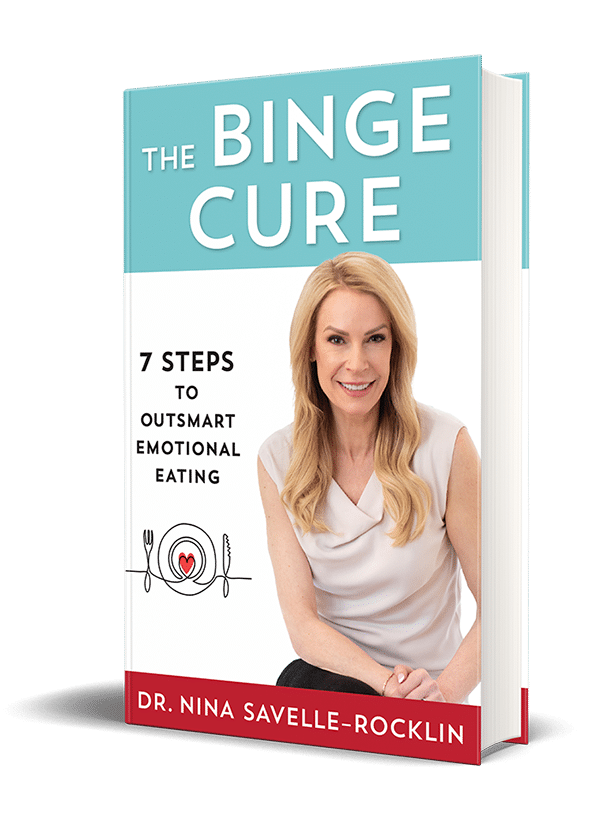
The Binge Cure Book!
Enter “CURE” to receive a 20% discount.
No, I don’t want access to this terrific resource to help me overcome binge eating.
The Author

Dr. Nina Savelle-Rocklin is a renowned author and podcast host and one of the nation’s leading psychoanalysts known for the psychology of eating. Her signature message of, “It’s not what you’re eating, it’s what’s eating ‘at’ you” has resonated with hundreds of thousands of listeners from around the globe in 40 countries. As founder of The Binge Cure Method, she guides emotional eaters to create lasting food freedom so they can take back control of their lives and feel good in their bodies.
Related Blogs










Ready to Start the New Year Differently?
If you're ready to break the cycle and finally understand why you turn to food, I'm here to help.
Take my free Emotional Eating Quiz to discover your hidden triggers and get personalized insights: https://quiz.drninainc.com
Book a Food Freedom Strategy Session to uncover the root causes and create a plan that actually works: https://calendly.com/drninainc/meeting-dr-nina
Join my 12-week Inner Circle program for deep, transformative work that addresses the psychology behind your eating: https://drninainc.com/inner-circle
This January, don't start another diet. Start understanding yourself. That's the resolution that will actually change your life.
 Free • 3 Minutes • Personalized Results