Dr. Nina Savelle-Rocklin

What Is Emotional Eating? (And How to Stop for Good)

Table of Contents
- What Is Emotional Eating?
- Common Emotional Eating Triggers
- The Emotional Eating Cycle
- How Emotional Eating Is Different from Binge Eating
- Why Emotional Eating Feels Automatic
- How to Stop Emotional Eating for Good
- The Real Problem Isn’t Food
- Frequently Asked Questions About Emotional Eating
- Ready to Stop Emotional Eating?
You know the feeling.
It’s been a long day. You’re stressed, overwhelmed, maybe a little lonely. And suddenly, you find yourself standing in front of the fridge, reaching for something anything to make you feel better.
You’re not physically hungry. But you eat anyway.
Maybe it’s a pint of ice cream. Maybe it’s a bag of chips. Maybe it’s whatever you can find in the pantry.
And for a few minutes, it works. The food soothes you. Distracts you. Numbs the uncomfortable feelings.
But then the guilt sets in. The shame. The frustration with yourself for doing it again.
If this sounds familiar, you’re not alone. And more importantly, you’re not broken.
What you’re experiencing is called emotional eating. And it has nothing to do with willpower or self-control.
What Is Emotional Eating?
Emotional eating is when you use food to manage feelings rather than to satisfy physical hunger.
It’s eating in response to stress, loneliness, boredom, sadness, anger, or anxiety. It’s reaching for food when you’re not hungry because something inside you needs soothing, comfort, or distraction.
And here’s what most people don’t understand: Emotional eating is not a character flaw. It’s a coping mechanism.
At some point, you learned that food could help you feel better. Maybe it calmed you down when you were anxious. Maybe it comforted you when you felt alone. Maybe it gave you something to do when you were bored or overwhelmed.
Food worked. And your brain remembered that.
So now, whenever those uncomfortable feelings show up, your brain automatically reaches for the solution that’s always worked: food.
But here’s the problem: While food can temporarily soothe emotions, it doesn’t actually solve them. The feelings are still there. And often, they’re joined by new feelings—guilt, shame, and frustration.
Common Emotional Eating Triggers
Emotional eating doesn’t happen randomly. It’s usually triggered by specific emotions or situations.
Here are the most common triggers I see in my 23 years of clinical practice:
Stress – When you’re overwhelmed, food can feel like a quick escape or a way to calm your nervous system.
Loneliness – Food provides comfort and companionship when you feel isolated or disconnected.
Boredom – Eating gives you something to do and provides stimulation when you feel understimulated or unfulfilled.
Sadness – Food can temporarily lift your mood or provide the comfort you’re craving.
Anger – If you struggle to express anger, you might “swallow” it instead—literally eating your feelings rather than expressing them.
Anxiety – Food can distract you from anxious thoughts or provide a sense of control when everything feels chaotic.
Childhood patterns – If food was used for comfort, reward, or distraction in your childhood, you likely learned to use it the same way as an adult.
The key is recognizing your specific triggers. Because once you know what emotions drive your eating, you can start addressing them directly.
The Emotional Eating Cycle
Emotional eating creates a cycle that keeps you stuck:
1. Trigger – Something stressful, upsetting, or uncomfortable happens.
2. Uncomfortable emotion – You feel anxious, sad, lonely, angry, or overwhelmed.
3. Reach for food – Instead of processing the emotion, you turn to food for relief.
4. Temporary relief – The food soothes, distracts, or numbs the feeling.
5. Guilt and shame – After eating, you feel guilty, ashamed, or frustrated with yourself.
6. More uncomfortable emotions – Now you’re dealing with the original emotion plus guilt and shame.
7. Reach for food again – To cope with these new feelings, you turn to food again.
And the cycle repeats.
This is why willpower doesn’t work. You’re not dealing with a food problem. You’re dealing with an emotional regulation problem.
How Emotional Eating Is Different from Binge Eating
People often ask me: “Is emotional eating the same as binge eating?”
Not exactly—but they’re closely related.
Emotional eating is eating in response to feelings rather than hunger. It can range from mindlessly snacking while stressed to eating larger amounts for comfort.
Binge eating involves eating large amounts of food in a short period, often feeling out of control, and typically followed by intense guilt or shame.
Many people who binge eat are also emotional eaters. But not all emotional eaters binge.
The good news? The underlying psychology is similar. Both involve using food to cope with emotions. And both can be healed by addressing the root causes.
Why Emotional Eating Feels Automatic
If you’ve ever thought, “I don’t even realize I’m doing it until it’s too late,” you’re not imagining things.
Emotional eating often happens on autopilot because it’s a learned pattern. Your brain has created a neural pathway: uncomfortable emotion → reach for food → temporary relief.
The more you repeat this pattern, the stronger the pathway becomes. Eventually, it happens so automatically that you don’t even consciously decide to eat. Your hand is in the pantry before you realize what’s happening.
This is why simply telling yourself “don’t do it” doesn’t work. You’re fighting against a deeply ingrained pattern. And willpower alone can’t rewire your brain.
What does work? Understanding the emotions driving the pattern and learning new ways to respond.
How to Stop Emotional Eating for Good
If you’re ready to break the cycle, here are six steps that address the root causes of emotional eating:
1. Pause and Identify the Emotion
The next time you reach for food when you’re not physically hungry, pause for just 30 seconds.
Ask yourself: What am I feeling right now?
You might be stressed, lonely, anxious, bored, sad, or angry. Or you might not know—and that’s okay too.
The goal isn’t to stop the eating immediately. It’s to start building awareness of what’s driving it.
2. Validate Your Feelings
Once you’ve identified the emotion, validate it.
Instead of judging yourself (“I shouldn’t feel this way”), acknowledge the feeling: “I’m feeling really stressed right now, and that makes sense given what’s happening.”
Emotions aren’t good or bad. They’re information. They’re signals that something needs your attention.
When you validate your feelings instead of pushing them away, they become less overwhelming. And you’re less likely to need food to cope with them.
3. Address the Root Cause
Emotional eating is a symptom. The real problem is the unmet need or unprocessed emotion beneath it.
Ask yourself: – If I’m stressed, what needs to change? Do I need better boundaries? More support? Time to rest? – If I’m lonely, how can I connect with others in a meaningful way? – If I’m angry, what do I need to express? Who do I need to set a boundary with?
Real change happens when you address what’s not working in your life, not just what’s on your plate.
4. Learn to Be with Discomfort
One of the reasons you reach for food is because you’ve learned to avoid uncomfortable emotions.
But emotions aren’t dangerous. They’re temporary. And they need to be felt, not fixed.
Start by allowing just 30 seconds to process your emotions. Notice what you’re feeling. Name it. Say it aloud and remind yourself that you will not always feel this way.
The more you practice, the less scary emotions become. And the less you’ll need food to escape them.
5. Remove Moral Labels from Food
When you label foods as “good” or “bad,” you create guilt and shame around eating.
And guilt and shame fuel emotional eating.
Give yourself permission to eat all foods without judgment. When food is no longer forbidden, it loses its emotional charge. And you’re less likely to use it to rebel, soothe, or cope.
6. Get Professional Support
If you’ve been struggling with emotional eating for years, you don’t have to figure this out alone.
Working with a therapist or coach who specializes in the psychology of eating can help you uncover the deeper patterns, heal old wounds, and develop new coping skills.
Emotional eating isn’t about food. It’s about what food is helping you manage, avoid, or express.
And when you address those deeper issues, the compulsion to eat emotionally fades naturally.
The Real Problem Isn’t Food
Here’s what I want you to understand: It’s not what you’re eating. It’s what’s eating at you.
Emotional eating is your psyche’s way of trying to take care of you. It’s trying to soothe the stress, numb the pain, fill the void, or distract you from what feels overwhelming.
Food isn’t the enemy. It’s been your friend your comfort, your companion, your coping mechanism.
But it’s also keeping you stuck.
Because as long as you’re using food to cope with emotions, you’re not learning how to actually feel them, process them, and move through them.
That’s how you achieve lasting freedom.
Frequently Asked Questions About Emotional Eating
What is emotional eating?
Emotional eating is eating in response to feelings rather than physical hunger. It's using food to cope with, avoid, or soothe uncomfortable emotions like stress, anxiety, loneliness, boredom, or sadness. Emotional eating isn't about lack of willpower or self control. It's a learned coping mechanism that develops when you don't have other ways to manage difficult feelings.
How do I know if I'm an emotional eater?
You're likely an emotional eater if you eat when you're not physically hungry, crave specific comfort foods when you're stressed or upset, eat to feel better or distract yourself from problems, feel guilty or ashamed after eating, or find yourself eating in response to boredom, loneliness, or anxiety. Emotional eating often happens automatically, without conscious awareness of the emotions driving it.
What's the difference between emotional eating and binge eating?
Emotional eating is eating in response to emotions rather than hunger. Binge eating is eating large amounts of food in a short period, often feeling out of control. While all binge eating involves emotions, not all emotional eating is binge eating. You can be an emotional eater without bingeing. However, emotional eating can escalate to binge eating when combined with restriction, deprivation, or intense emotional distress.
Can you stop emotional eating without therapy?
Some people can reduce emotional eating by increasing awareness of their triggers, practicing emotional regulation skills, and developing alternative coping strategies. However, if emotional eating is deeply rooted in past trauma, chronic stress, or unresolved emotional wounds, therapy with a specialist in eating issues can be extremely helpful. Therapy addresses the root causes, not just the surface behavior, which creates lasting change.
Why do I emotionally eat at night?
Eating at night is common for emotional eaters because the day's stress, emotions, and unmet needs accumulate by evening. You may also be physically hungry if you restricted food during the day. At night, you're alone with your thoughts, defenses are down, and food becomes the easiest way to cope. Night eating often signals that you need more nourishment during the day and better ways to process emotions in the evening.
Is emotional eating the same as food addiction?
Emotional eating and food addiction are related but different. Emotional eating is using food to cope with feelings. Food addiction refers to a compulsive relationship with food where you feel unable to control your eating despite negative consequences. Some researchers debate whether food addiction is a true clinical diagnosis. What's clear is that both involve using food to meet emotional needs, and both benefit from addressing the underlying psychological causes.
How long does it take to stop emotional eating?
The timeline varies depending on how long you've been emotionally eating, how deeply ingrained the patterns are, and whether you're addressing the root causes. Some people notice shifts within a few weeks of increasing awareness and practicing new coping skills. For others with long histories of using food to cope, it may take several months to a year. Progress isn't linear, but with consistent work on the underlying emotions, change is absolutely possible.
What should I do when I want to emotionally eat?
When you want to emotionally eat, pause and ask yourself: Am I physically hungry, or am I feeling something uncomfortable? If you're not hungry, identify the emotion. Name it without judgment. Acknowledge that the feeling is valid and understandable. Reassure yourself with grounded truth, not toxic positivity. Then decide: Do I want to eat anyway, or do I want to try a different way to cope? Sometimes you'll still eat, and that's okay. The goal is awareness, not perfection.
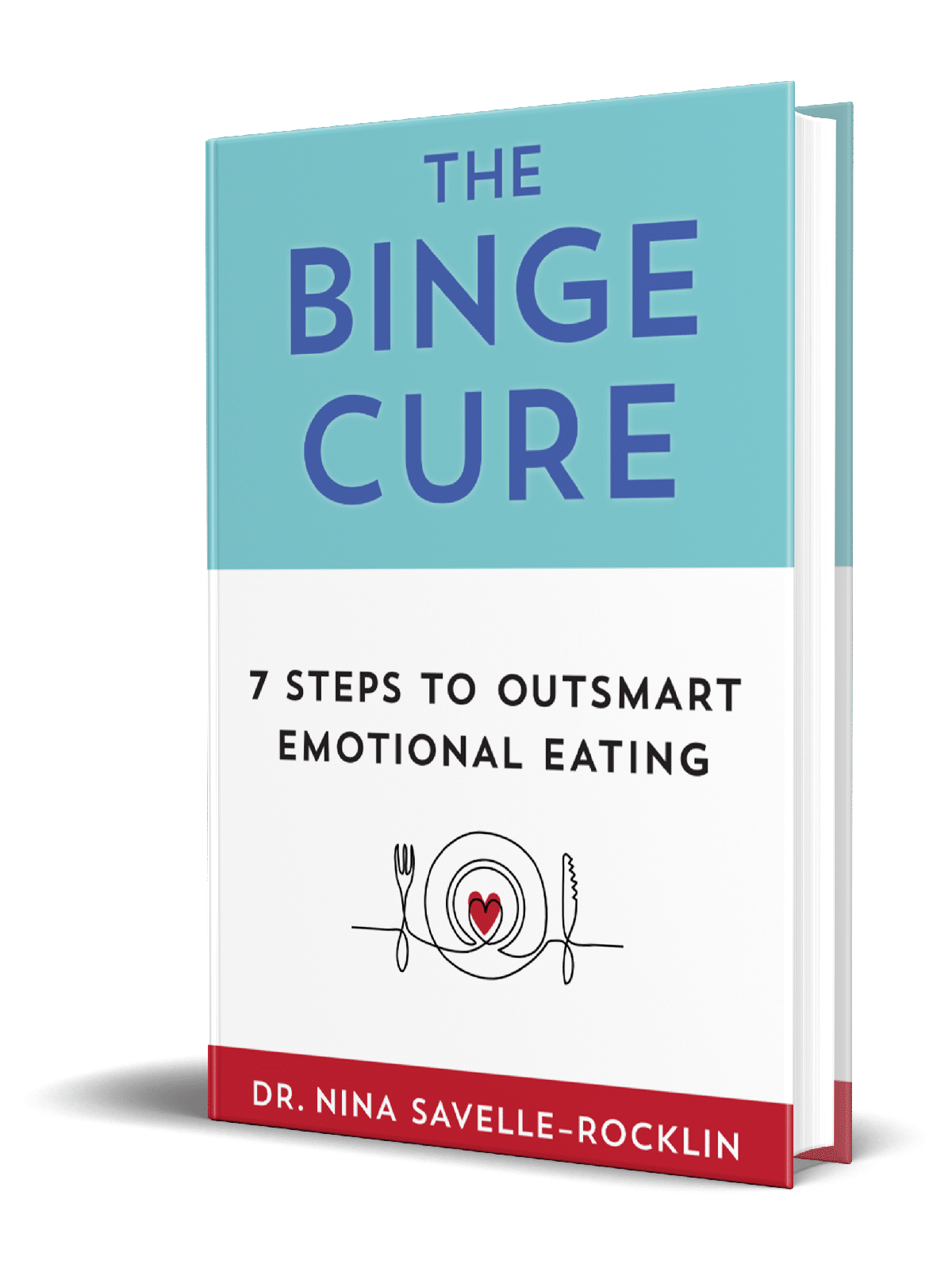
Sick of obsessing about every bite?
GET THE CURE
The Binge Cure Book!
Enter “CURE” to receive a 20% discount.
No, I don’t want access to this terrific resource to help me overcome binge eating.
The Author

Dr. Nina Savelle-Rocklin is a renowned author and podcast host and one of the nation’s leading psychoanalysts known for the psychology of eating. Her signature message of, “It’s not what you’re eating, it’s what’s eating ‘at’ you” has resonated with hundreds of thousands of listeners from around the globe in 40 countries. As founder of The Binge Cure Method, she guides emotional eaters to create lasting food freedom so they can take back control of their lives and feel good in their bodies.
Related Blogs










Ready to Stop Emotional Eating?
If you're exhausted from using food to cope with your emotions and ready to understand what's really driving your eating, I can help.
Take my free Emotional Eating Quiz at quiz.drninainc.com to discover your hidden emotional eating triggers and get personalized insights into what's keeping you stuck in the emotional eating cycle.
Or, if you're ready for personalized support, book a session with me by Clicking Here and let's uncover the root causes of your emotional eating so you can finally develop healthier ways to cope and find lasting food freedom.
You deserve to stop using food as your only coping mechanism. You deserve to feel your feelings without fear. And it starts with understanding that it's not about the food. It's about what's eating at you.
 Free • 3 Minutes • Personalized Results