Dr. Nina Savelle-Rocklin

How to Build Confidence: 6 Proven Strategies

Table of Contents
- Why Weight Loss Doesn’t Equal Confidence
- Where Did You Learn You Weren’t Enough?
- 1. Challenge Negative Self-Talk
- 2. Set Realistic Goals
- 3. Get Support
- 4. Do What You Love
- 5. Move Your Body with Respect
- 6. Celebrate Yourself
- Final Thoughts: Confidence Isn’t Earned, It’s Remembered
- Frequently Asked Questions about How to Build Confidence
Ever wonder how to build confidence when you constantly feel not enough? Maybe you think, Once I lose weight, I’ll finally feel better about myself. Or, when I stop bingeing, I’ll finally feel confident.
But confidence doesn’t come from changing your body. It comes from shifting the way you see yourself.
Why Weight Loss Doesn’t Equal Confidence
We’ve been conditioned to believe that confidence comes after change. Lose weight, get the job, meet the right person, and then you’ll feel confident. Easy, peasy.
Or not so much. The paradox is that focusing on our appearance often makes us feel more insecure, not less. That’s because confidence built on external validation is fragile. It disappears when things don’t go well. The number on the scale doesn’t change, the compliment doesn’t come, or the day that doesn’t go as planned.
Confidence built on self-compassion is what lasts. It’s what lets you say, I’m doing my best or I’m going to be okay, even on the hard days. When your worth doesn’t rise or fall with your achievements, it’s easier to feel good about yourself.
As you learn how to build confidence, remember this: you don’t create confidence by earning approval; you create it by ending the war with yourself.
Where Did You Learn You Weren’t Enough?
To build confidence, it helps to understand where self-doubt begins. None of us are born insecure; we learn to doubt ourselves or think poorly of ourselves.
Maybe it started with comparisons in school, where you felt different. Or at home, hearing subtle messages about your appearance or abilities. Perhaps rejection, bullying, or criticism made you believe something was wrong with you.
When you recognize that your insecurities were learned, you can unlearn them.
1. Challenge Negative Self-Talk
Your inner critic might sound like it’s keeping you in check, but really, it’s keeping you feeling bad about yourself. You become more confident when you challenge that voice instead of believing it.
Even small changes can have big results. Try this: the next time you think, I can’t do this, add one word yet.
I can’t do this… yet.
That small shift turns criticism into possibility.
You build confidence not by silencing self-doubt, but by talking back to it. Over time, your inner dialogue becomes kinder, and your sense of worth stronger.
2. Set Realistic Goals
Confidence isn’t built in one big moment; it’s earned through many small wins. When you set realistic goals and meet them, you prove to yourself that you can trust your own follow-through.
Start small. Don’t wait to feel confident to take action; take action to feel confident. Each small success strengthens your belief in yourself.
3. Get Support
When you surround yourself with people who see your strengths and remind you of your value, it’s easier to believe in yourself.
Seek out those who lift you up, not those who reinforce your fears. Supportive relationships reflect the truth of who you are, and validate that you are likeable and lovable.
And if you struggle to find that support from others, therapy can help you internalize it for yourself. A therapist doesn’t fix you; they help you remember that you aren’t broken and they help you heal.
4. Do What You Love
When you engage in fun activities that bring you joy, you’ll be focused on the experience and not your appearance.
Whether it’s painting, hiking, dancing, writing, or playing music, activities that bring you joy remind you of your aliveness and return you to yourself.
Confidence comes from passion, not perfection. Do what lights you up, and you’ll feel better in your life and less focused on food.
5. Move Your Body with Respect
Exercise can feel like punishment, and if that’s the case, no wonder so many people resist exercising. Reframe exercise as something you’re doing for yourself, not to yourself. Moving your body is more about connecting to your physicality, and less about changing your appearance.
You don’t need to spend hours at the gym to feel empowered and confident. A walk, a stretch, a few deep breaths these are ways of saying, I care about my body.
Confidence thrives when your relationship with your body shifts from controlling and reshaping to a more caring stance.
6. Celebrate Yourself
When was the last time you gave yourself credit?
Many people minimize accomplishments or immediately move on to the next goal. You feel more confident when you stop and notice what you’ve already done.
Try keeping a “confidence journal.” Each night, write one thing you did well, something you handled, learned, or even something new you tried, regardless of the outcome. Over time, those notes become a record of your resilience.
Final Thoughts: Confidence Isn’t Earned, It’s Remembered
True confidence doesn’t come from changing your body or becoming a “better” version of yourself. It comes from finally seeing yourself with compassion instead of criticism.
You deserve to feel at home within yourself now, not someday. When you stop tying your worth to accomplishments, numbers, or appearance, you create space for a steadier, quieter sense of self. That’s the kind of confidence that lasts.
Frequently Asked Questions about How to Build Confidence
How can I build confidence when I feel ashamed of my eating habits?
Start by practicing self-compassion. Shame keeps you stuck, while kindness moves you forward. Remind yourself that eating behaviors are coping strategies, not character flaws. You’re not weak; you’re human.
What can I do to feel better about myself?
Challenge the voice of comparison. Instead of focusing on where you “should” be, focus on what’s real right now. Celebrate progress, not perfection.
How can I separate my self-worth from my weight?
Recognize that your body is not a reflection of your worth; it’s where your life happens. Confidence grows when you stop waging war against your body and start appreciating what it allows you to do.
How can I gain the confidence to try new things before losing weight?
Confidence doesn’t come after change; it comes from action. Take one small step outside your comfort zone. Each step reinforces courage and builds self-trust.
Why doesn’t weight loss automatically create confidence?
Because confidence comes from self-acceptance, not self-control. Weight loss may change your reflection, but not your relationship with yourself. True confidence comes from knowing your worth doesn’t depend on the mirror.
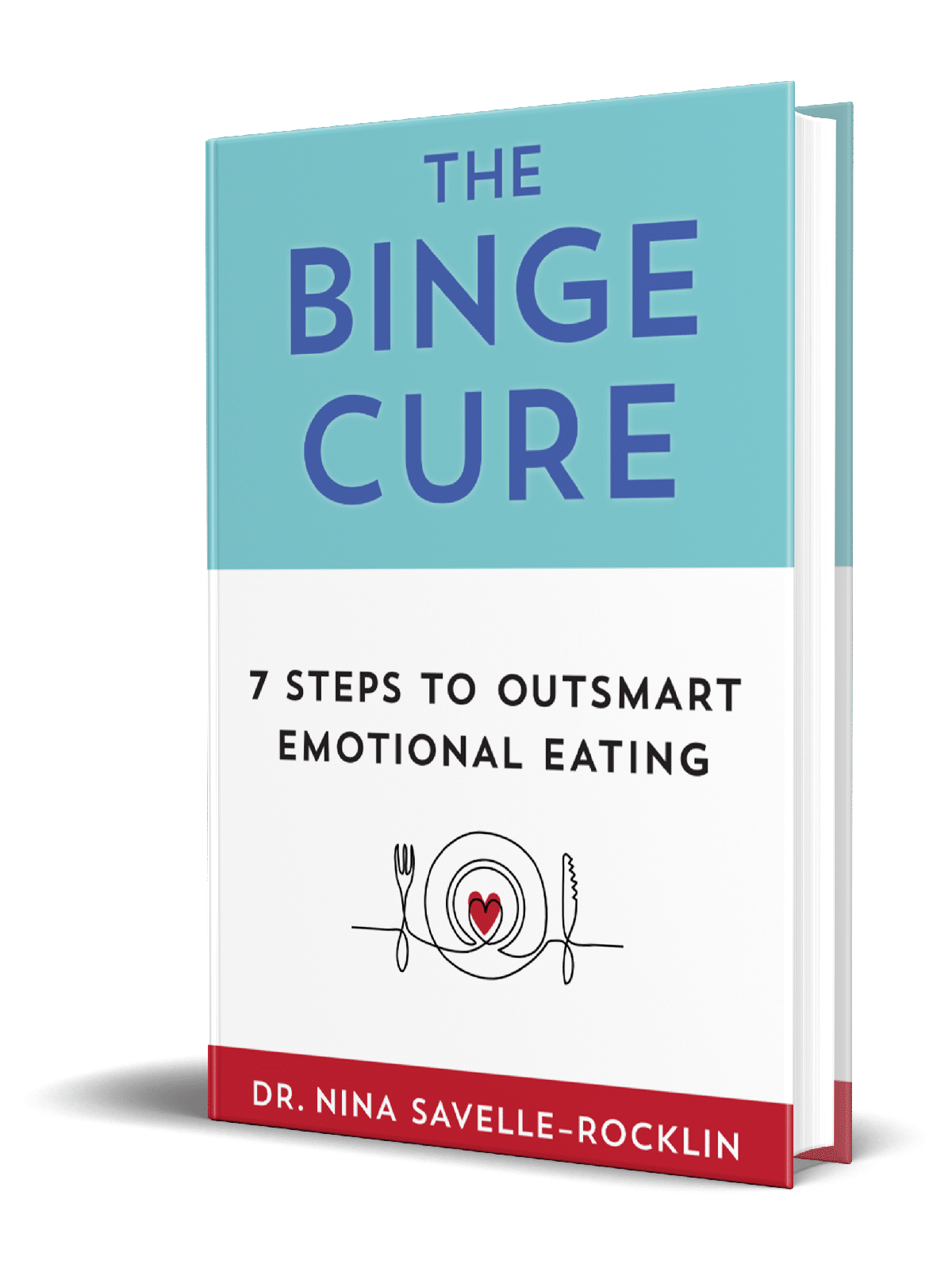
Sick of obsessing about every bite?
GET THE CURE
The Binge Cure Book!
Enter “CURE” to receive a 20% discount.
No, I don’t want access to this terrific resource to help me overcome binge eating.
The Author

Dr. Nina Savelle-Rocklin is a renowned author and podcast host and one of the nation’s leading psychoanalysts known for the psychology of eating. Her signature message of, “It’s not what you’re eating, it’s what’s eating ‘at’ you” has resonated with hundreds of thousands of listeners from around the globe in 40 countries. As founder of The Binge Cure Method, she guides emotional eaters to create lasting food freedom so they can take back control of their lives and feel good in their bodies.
Related Blogs










 Free • 3 Minutes • Personalized Results