Dr. Nina Savelle-Rocklin

Why You Feel Guilty After Eating and How to Stop

You finish eating and immediately the thoughts start:
“I shouldn’t have eaten that.”
“Why did I eat so much?”
“I have no self-control.”
The guilt is instant, heavy, and relentless. It doesn’t matter if you ate a cookie or a full meal. The shame is the same.
If this sounds familiar, you’re not dealing with a food problem. You’re dealing with guilt that has nothing to do with what you ate and everything to do with what’s happening inside you.
Here’s why you feel guilty after eating and how to finally stop the cycle.
What Food Guilt Really Is
Food guilt is the shame, regret, or self-criticism you feel after eating, especially when you’ve eaten something you labeled as “bad” or eaten more than you think you should have.
It’s not about the food. It’s about the meaning you’ve attached to eating.
For some people, food guilt shows up after every meal. For others, it only appears after certain foods or amounts. But the pattern is the same: eating triggers an internal attack.
You might think:
“I’m so weak.”
“I ruined everything.”
“I’ll never get this right.”
“What’s wrong with me?”
Food guilt isn’t just an uncomfortable feeling. It’s a destructive cycle that keeps you stuck in patterns of restriction, overeating, and shame.
Why You Feel Guilty After Eating
Food guilt doesn’t come out of nowhere. It has roots in your beliefs, your history, and the way you’ve learned to relate to food and yourself.
1. You’ve Labeled Foods as Good or Bad
When you divide food into categories like “good” and “bad,” “clean” and “junk,” or “healthy” and “unhealthy,” you create a moral framework around eating.
Eating a salad makes you good. Eating pizza makes you bad.
This black-and-white thinking sets you up for guilt because every time you eat something you’ve labeled as bad, you feel like you’ve done something wrong.
But food is not a moral issue. Food is fuel, pleasure, culture, and connection. When you attach morality to it, you attach shame to yourself.
2. You’ve Internalized Diet Culture Messages
Diet culture has taught you that your worth is tied to what you eat and how your body looks. It tells you that eating less is virtuous and eating more is failure.
You’ve absorbed these messages for years, maybe decades. They’ve become the voice in your head that judges every bite.
That voice isn’t yours. It’s the internalized critic shaped by a culture that profits from your shame.
3. You’re Using Food Guilt to Punish Yourself
For many people, food guilt is a form of self-punishment.
Maybe you feel guilty about something unrelated to food, like setting a boundary, taking time for yourself, or not being “perfect.” Eating becomes the outlet for that guilt, and food guilt becomes the way you punish yourself.
The guilt isn’t really about the food. It’s about deeper feelings of unworthiness, shame, or the belief that you don’t deserve to enjoy things.
4. You Ate Past Fullness or Lost Control
If you ate more than you intended or felt out of control while eating, guilt often follows.
But that guilt isn’t helping you. It’s actually making things worse.
When you feel guilty after eating, you’re more likely to restrict the next day, which leads to more overeating, which leads to more guilt. The cycle continues.
5. Your Inner Critic Is Trying to Protect You
This might sound strange, but your inner critic believes it’s helping you.
It thinks that if it’s harsh enough, critical enough, and punishing enough, you’ll finally “get it together” and stop overeating.
But criticism doesn’t create change. It creates shame. And shame drives you back to food for comfort.
The Food Guilt Cycle: Why It Keeps You Stuck
Food guilt creates a vicious cycle that’s hard to escape:
1. You eat something you’ve labeled as bad or eat more than you think you should.
2. Guilt and shame flood in immediately.
3. You criticize yourself harshly.
4. The criticism creates emotional pain.
5. You restrict food to “make up for it” or you eat again to escape the pain.
6. The cycle repeats.
The only way to stop this cycle is to interrupt the guilt at its source and change the way you relate to food and yourself.
How Food Guilt Affects Your Relationship with Food
Food guilt doesn’t just make you feel bad. It actively damages your relationship with food and keeps you trapped in disordered eating patterns.
When you feel guilty after eating:
You’re more likely to restrict, which leads to binge eating.
You can’t enjoy food, even when it tastes good.
You eat in secret to avoid judgment from yourself and others.
You use exercise as punishment instead of movement for joy.
You disconnect from your body’s hunger and fullness signals.
You feel anxious and obsessed with food all the time.
Food guilt keeps you stuck in a war with yourself. And in that war, nobody wins.
How to Stop Feeling Guilty After Eating
Stopping food guilt requires more than positive thinking. It requires changing the beliefs, patterns, and inner dialogue that fuel the guilt in the first place.
1. Recognize That Food Has No Moral Value
Food is not good or bad. Food is just food.
A cookie is not a moral failure. A salad is not a virtue.
When you remove the moral labels from food, you remove the foundation for guilt. You can eat without attaching meaning to your worth as a person.
Start practicing neutral language: “I ate pizza” instead of “I was bad and ate pizza.”
2. Identify the Real Source of the Guilt
Ask yourself: Is this guilt really about the food, or is it about something else?
Are you feeling guilty because:
You took time for yourself?
You said no to someone?
You’re not being “perfect”?
You enjoyed something?
You feel unworthy of pleasure?
When you identify the real source of the guilt, you can address it directly instead of channeling it through food.
3. Acknowledge and Validate Your Feelings
If you’re feeling guilty after eating, acknowledge it without judgment.
Say to yourself: “I’m feeling guilty right now. That’s uncomfortable, and it makes sense given how I’ve been taught to think about food.”
You’re not being dramatic. Your feelings are real. But they don’t mean you did anything wrong.
When you validate your feelings, you reduce their intensity and create space for compassion.
4. Reassure Yourself with Grounded Truth
Remind yourself of the truth: “Eating is a normal, necessary part of being human. I did nothing wrong. My body needed food, and I gave it food. I am allowed to eat and enjoy eating.”
This isn’t toxic positivity. It’s grounding yourself in reality instead of letting the inner critic run wild.
The more you practice reassuring yourself, the quieter the guilt becomes.
5. Challenge Your Inner Critic
When the critical voice says, “You shouldn’t have eaten that,” talk back to it.
Ask:
“Says who?”
“What rule am I breaking?”
“Would I say this to someone I care about?”
“Is this thought helping me or hurting me?”
Your inner critic is not the voice of truth. It’s the voice of fear, shame, and old conditioning. You don’t have to believe it.
6. Stop Restricting Food
If you restrict food to “make up for” eating, you’re feeding the guilt cycle.
Restriction leads to deprivation. Deprivation leads to overeating. Overeating leads to guilt. Guilt leads to restriction. And the cycle continues.
The way to stop food guilt is to stop restricting. Eat regular, satisfying meals. Give yourself permission to eat all foods. When food is no longer forbidden, the guilt loses its power.
7. Practice Self-Compassion
Self-compassion is the antidote to food guilt.
Instead of attacking yourself, try speaking to yourself the way you’d speak to a friend:
“You’re doing your best. Eating is not a moral issue. You deserve kindness, not criticism.”
Self-compassion doesn’t mean letting yourself off the hook. It means treating yourself with the same care and understanding you’d offer to anyone else.
What Food Guilt Is Really About
After 23 years as a psychoanalyst specializing in eating issues, I can tell you this: food guilt is never just about the food.
It’s about perfectionism. It’s about feeling unworthy. It’s about internalizing the belief that you need to earn the right to eat, to enjoy, to take up space.
Food becomes the battleground for deeper struggles with self-worth, control, and acceptance.
And here’s the truth: you don’t need to earn the right to eat. You don’t need to be perfect to deserve nourishment. You don’t need to punish yourself for being human.
When you address the root causes of food guilt, the guilt itself begins to dissolve.
You Need WHY-Power, Not Willpower
If you’ve been trying to stop food guilt by eating “better” or being more disciplined, it’s time for a different approach.
Willpower is about controlling your eating. WHY-power is about understanding why you feel guilty in the first place.
When you understand what’s driving the guilt, you can address the real issue instead of just fighting the symptom. That’s where lasting change happens.My signature Binge Cure Method is built on this foundation: identifying your hidden emotional triggers, healing from within, and creating lasting food freedom without dieting, deprivation, or shame.
Frequently Asked Questions About Food Guilt
Why do I feel guilty after eating everything?
If you feel guilty after eating everything, it’s likely because you’ve internalized the belief that eating itself is somehow wrong or that you don’t deserve to eat without earning it. This often comes from diet culture, perfectionism, or deeper feelings of unworthiness. The guilt isn’t about the food. It’s about your relationship with yourself.
Is it normal to feel guilty after eating?
Feeling occasional guilt after overeating or eating past fullness can be common, but chronic food guilt after every meal or snack is not normal or healthy. It’s a sign of disordered eating patterns and internalized shame. Normal eating includes eating without guilt, regardless of what or how much you ate.
How do I stop feeling guilty about eating carbs or sugar?
Stop labeling carbs and sugar as “bad” foods. These foods are not morally wrong, and eating them doesn’t make you weak or out of control. Practice neutral language, remind yourself that all foods fit in a balanced diet, and challenge the diet culture beliefs that taught you to fear these foods in the first place.
Why do I feel guilty after eating even when I’m hungry?
This happens when you’ve internalized the belief that hunger isn’t a good enough reason to eat, or that you need to ignore or override your body’s signals. It’s common in people who have dieted extensively or who struggle with perfectionism. Your body is designed to feel hunger and be fed. You don’t need permission to eat when you’re hungry.
Can food guilt cause binge eating?
Yes. Food guilt is one of the main drivers of the restrict-binge cycle. When you feel guilty after eating, you’re more likely to restrict food the next day to “make up for it.” That restriction leads to intense hunger and cravings, which leads to binge eating, which leads to more guilt. Breaking the guilt cycle is essential to stopping binge eating.
How long does it take to stop feeling guilty after eating?
The timeline varies depending on how deeply ingrained the guilt is and how much work you do to challenge the underlying beliefs. Some people notice significant shifts within a few weeks of practicing self-compassion and removing moral labels from food. For others with long histories of dieting and shame, it may take several months of consistent work.
What should I do when I feel guilty after eating?
First, pause and acknowledge the guilt without judgment. Second, ask yourself if the guilt is really about the food or something else. Third, challenge the critical thoughts and replace them with grounded truth. Fourth, practice self-compassion instead of self-criticism. Fifth, eat normally at your next meal instead of restricting to “make up for it.”
Is food guilt a sign of an eating disorder?
Food guilt itself is not an eating disorder, but it’s a common symptom of disordered eating and can be present in eating disorders like binge eating disorder, bulimia, anorexia, and orthorexia. If food guilt is frequent, intense, and interfering with your life, it’s worth seeking professional support from a therapist or specialist in eating issues.
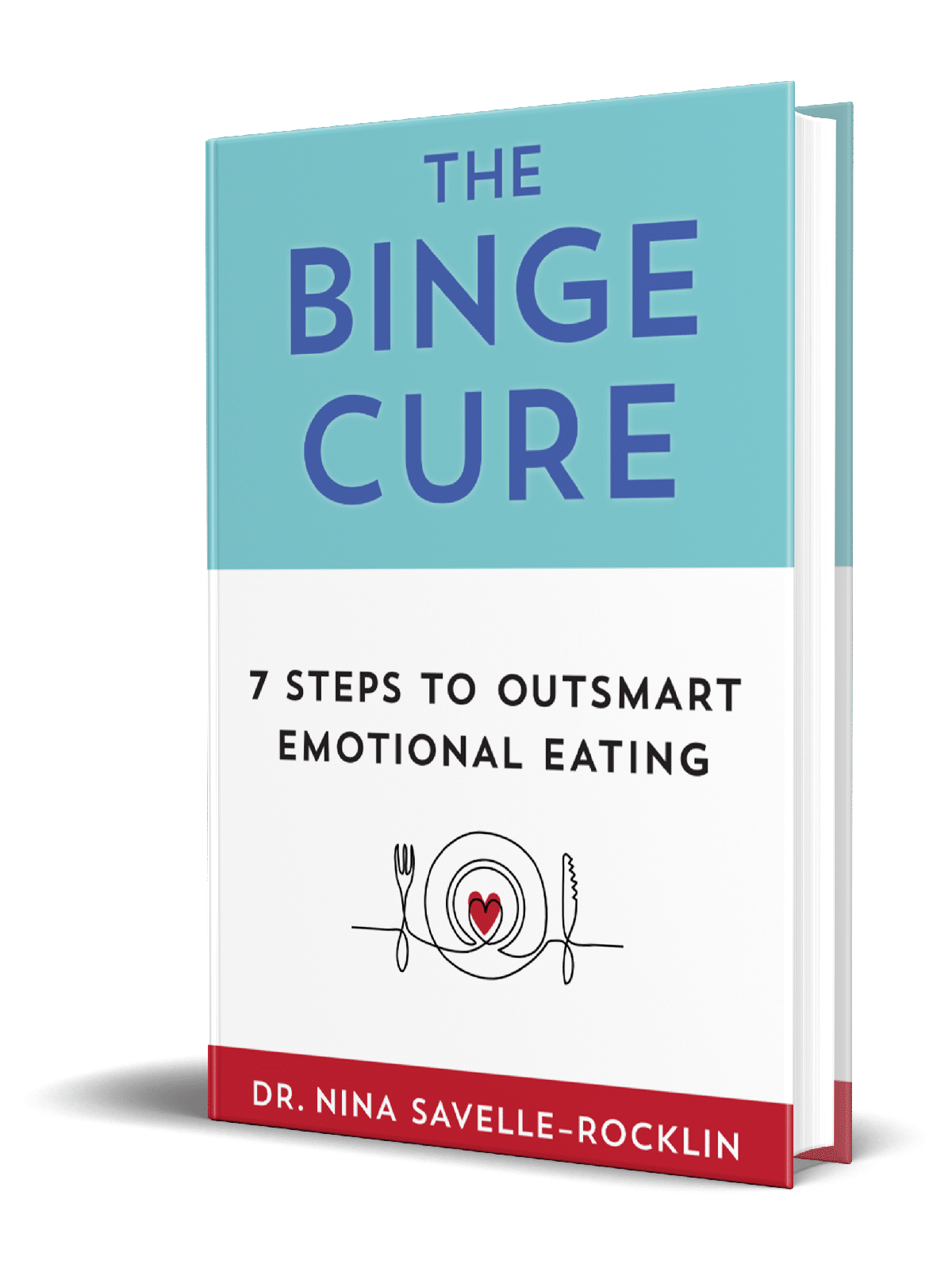
Sick of obsessing about every bite?
GET THE CURE
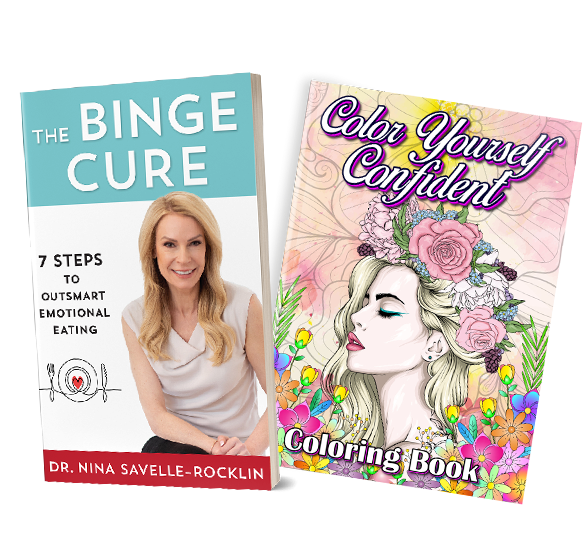
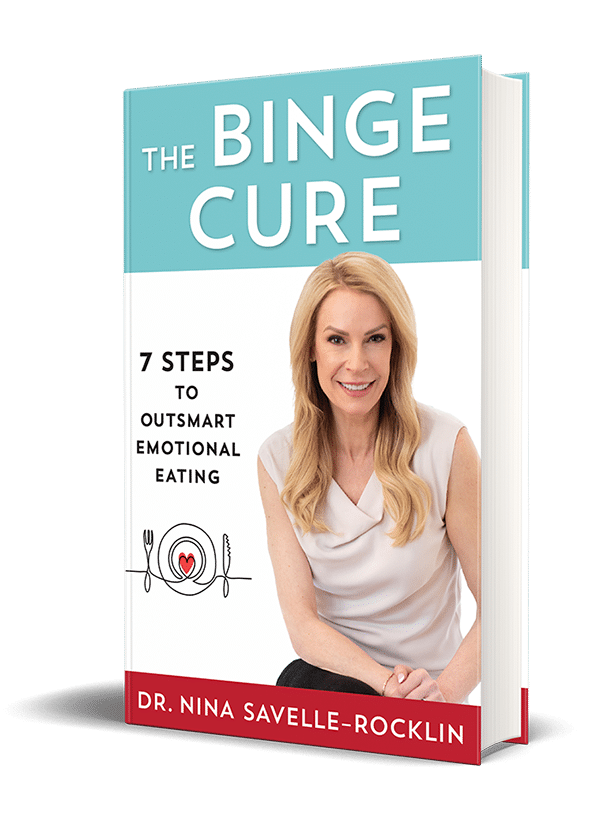
The Binge Cure Book!
Enter “CURE” to receive a 20% discount.
No, I don’t want access to this terrific resource to help me overcome binge eating.
The Author

Dr. Nina Savelle-Rocklin is a renowned author and podcast host and one of the nation’s leading psychoanalysts known for the psychology of eating. Her signature message of, “It’s not what you’re eating, it’s what’s eating ‘at’ you” has resonated with hundreds of thousands of listeners from around the globe in 40 countries. As founder of The Binge Cure Method, she guides emotional eaters to create lasting food freedom so they can take back control of their lives and feel good in their bodies.
Related Blogs









Ready to Stop Food Guilt for Good?
If you’re exhausted from the constant guilt and shame around eating and ready to understand what’s really driving it, I can help.
Take my free Emotional Eating Quiz at quiz.drninainc.com to discover your hidden emotional eating triggers and get personalized insights into what’s keeping you stuck in the guilt cycle.
Or, if you’re ready for personalized support, book a session with me by Clicking Here and let’s uncover the root causes of your food guilt so you can finally eat with peace, confidence, and freedom: Go Here
You deserve to eat without guilt. You deserve to enjoy food. And it starts with understanding that it’s not about the food. It’s about what’s eating at you.
 Free • 3 Minutes • Personalized Results