Dr. Nina Savelle-Rocklin

Why Can’t I Stop Eating at Night?

It’s 9 PM. You’ve had dinner. You’re not hungry. But you find yourself standing in front of the pantry, reaching for chips, cookies, or whatever you can find. You tell yourself you’ll just have a little, but before you know it, you’ve eaten half the bag.
You feel frustrated, guilty, and confused. Why does this keep happening? Why can’t you stop eating at night?
If this sounds familiar, you’re not alone. Night eating is one of the most common patterns I see in my practice, and it’s rarely about hunger. It’s about what’s happening emotionally and psychologically when the day finally slows down.
Here’s what’s really going on and how to stop the cycle.
What Is Night Eating?
Night eating is eating large amounts of food in the evening or late at night, often when you’re not physically hungry.
It’s different from an occasional late-night snack. Night eating is a pattern. It’s eating that feels compulsive, out of control, or automatic. You might not even realize you’re doing it until you’re halfway through a bag of something.
Night eating often involves:
- Eating when you’re not hungry
- Eating quickly or mindlessly
- Feeling unable to stop once you start
- Eating alone or in secret
- Feeling guilty, ashamed, or frustrated afterward
- Repeating the pattern night after night
If this describes your experience, you’re dealing with night eating. And it’s not about willpower or discipline. It’s about what’s driving the behavior underneath.
Why You Can’t Stop Eating at Night: The Real Reasons
Night eating isn’t random. There are specific psychological and physiological reasons it happens, and understanding them is the first step to stopping the cycle.
1. Your Emotions Finally Catch Up with You
During the day, you’re busy. You’re working, taking care of others, managing responsibilities, staying distracted. But at night, everything slows down. The distractions disappear. And all the emotions you’ve been avoiding all day finally catch up with you.
Stress. Loneliness. Anxiety. Sadness. Frustration. Overwhelm.
When these feelings surface and you don’t know how to process them, food becomes the easiest way to numb, soothe, or distract yourself. Night eating becomes your way of coping with emotions you don’t want to feel.
2. You’ve Restricted Food During the Day
If you’ve skipped meals, eaten “perfectly,” or restricted calories during the day, your body is depleted by evening. Your blood sugar is low. Your hunger hormones are surging. And your brain is screaming for fuel.
This isn’t a lack of willpower. This is biology. When you restrict during the day, night eating is your body’s survival response. It’s trying to get the energy it needs.
The restrict-binge cycle is one of the most common patterns I see: restrict all day, binge at night, feel guilty, restrict again the next day. And the cycle continues.
3. Nighttime Lacks Structure
During the day, you have meetings, tasks, schedules, and obligations. But at night? There’s nothing to do. No structure. No distraction. Just you, your thoughts, and the kitchen.
Without structure, it’s easy to turn to food for entertainment, comfort, or something to do. Food fills the void when you’re bored, understimulated, or don’t know what else to do with yourself.
4. You’re Exhausted and Depleted
By the end of the day, you’re tired. Your willpower is gone. Your emotional reserves are empty. You don’t have the energy to fight cravings or make conscious choices.
When you’re depleted, your brain seeks quick relief. And food provides that. It’s fast, it’s easy, and it temporarily makes you feel better.
5. Night Eating Has Become a Habit
If you’ve been eating at night for weeks, months, or years, your brain has created a powerful habit loop. Your brain has learned: nighttime equals eating. It’s automatic. You don’t even think about it anymore. You just do it.
Breaking this habit requires awareness, intention, and addressing the underlying needs that keep the pattern alive.
The Night Eating Cycle: Why It Keeps Happening
Night eating creates a cycle that’s hard to escape:
1. You restrict or “be good” during the day.
2. By evening, you’re physically depleted and emotionally overwhelmed.
3. You eat to cope, soothe, or satisfy hunger.
4. You feel guilty and ashamed.
5. You promise yourself you’ll do better tomorrow.
6. The next day, you restrict again to “make up for” the night before.
7. By evening, you’re depleted again, and the cycle repeats.
The only way to stop this cycle is to interrupt it at multiple points: stop restricting during the day, address your emotions, and create new evening routines that meet your real needs.
How to Tell If You’re a Night Eater
Not sure if you’re dealing with night eating? Ask yourself:
Do you eat most of your calories after dinner?
Do you eat at night even when you’re not hungry?
Do you feel out of control when you start eating at night?
Do you eat quickly, mindlessly, or in secret at night?
Do you feel guilty or ashamed after eating at night?
Do you restrict food during the day and overeat at night?
Does night eating interfere with your sleep or how you feel the next day?
If you answered yes to several of these, you’re likely caught in the night eating cycle.
How to Stop Eating at Night: 6 Steps That Actually Work
Stopping night eating isn’t about willpower or locking the kitchen. It’s about addressing the root causes and creating new patterns that actually meet your needs.
1. Eat Enough During the Day
This is non-negotiable. If you’re restricting calories, skipping meals, or eating “perfectly” during the day, your body will demand food at night.
Eat regular, satisfying meals throughout the day. Include protein, fat, and carbohydrates. Don’t skip breakfast or lunch. Give your body the fuel it needs so it’s not in survival mode by evening.
2. Identify What You’re Really Feeling
Before you eat at night, pause and ask yourself: Am I physically hungry, or am I feeling something?
If you’re not hungry, go deeper. What emotion is present? Stress? Loneliness? Boredom? Anxiety? Sadness?
Name the emotion. Write it down. Say it out loud. This simple act of awareness interrupts the automatic pattern and gives you a choice.
3. Acknowledge and Validate Your Emotions
Once you’ve identified the emotion, acknowledge it without judgment. Say to yourself: “I’m feeling stressed right now,” or “I’m lonely and that’s really hard.”
You’re not being dramatic. Your feelings are real and valid. Most people skip this step and go straight to eating. But emotions need to be seen and heard first.
When you validate your feelings, you give yourself the compassion you’ve been seeking from food.
4. Reassure Yourself with Grounded Truth
Remind yourself of your resilience. Say: “This is hard, and I can handle hard things. I’ve gotten through difficult evenings before, and I will get through this one, too.”
This isn’t toxic positivity. It’s acknowledging the discomfort AND reminding yourself of your strength. That combination creates emotional safety, which is what you’re really craving.
5. Ask Yourself: What Do I Really Need Right Now?
If you’re not hungry, food isn’t what you need. Ask yourself:
What would actually help me right now?
Do you need rest? Connection? To move your body? To express something? To set a boundary? To cry? To feel seen?
Once you identify the real need, take action to meet it. Call a friend. Take a bath. Journal. Go to bed early. Do something that actually addresses what’s driving the urge to eat.
6. Create a New Evening Routine
If night eating has become a habit, you need to create a new routine that doesn’t involve food.
This doesn’t mean distracting yourself with busywork. It means creating a routine that genuinely meets your needs for rest, comfort, and winding down.
Ideas: – Set a specific time to close the kitchen for the night – Create a calming bedtime routine (reading, stretching, bath) – Spend time connecting with someone you care about – Do something creative or meaningful – Go to bed earlier if you’re exhausted
The goal isn’t to avoid food. It’s to create a life where food isn’t the only source of comfort and relief.
What Night Eating Is Really About
After 23 years as a psychoanalyst specializing in eating issues, I can tell you this: night eating is not about the food.
It’s about what’s eating at you.
The stress you’re carrying. The emotions you’re avoiding. The life that doesn’t fit anymore. The exhaustion you can’t escape. The loneliness you don’t know how to fill.
Food becomes the Band-Aid for wounds that need real healing.
And here’s the truth: you’re not weak. You’re not broken. Night eating is a coping strategy. It’s how you’ve learned to manage overwhelming feelings and unmet needs.
But it doesn’t have to be this way forever. When you address the root causes, the night eating loses its power.
You Need WHY-Power, Not Willpower
If you’ve been trying to stop night eating through sheer willpower, it’s time for a different approach.
Willpower is about forcing yourself not to eat. WHY-power is about understanding why you eat in the first place.
When you understand what’s driving your night eating, you can address the real need instead of just fighting the urge. That’s where lasting change happens.
The Binge Cure Method is built on this foundation: identifying your hidden emotional triggers, healing from within, and creating lasting food freedom without dieting, deprivation, or shame.
Frequently Asked Questions:
Why do I eat so much at night?
Night eating happens for several reasons: emotions you’ve avoided all day finally surface, you’ve restricted food during the day and your body is depleted, nighttime lacks structure and distraction, you’re exhausted and seeking quick relief, or night eating has become an automatic habit. It’s rarely about hunger.
Is night eating the same as binge eating?
Not always. Night eating is eating large amounts of food in the evening or late at night, often without physical hunger. Binge eating disorder involves recurrent episodes of eating with a sense of loss of control and significant distress. Night eating can be a form of binge eating, but not all night eating meets the criteria for binge eating disorder.
How do I stop eating at night when I’m not hungry?
First, eat enough during the day so your body isn’t depleted by evening. Second, pause before eating and identify what you’re really feeling. Third, acknowledge and validate that emotion. Fourth, reassure yourself that you can handle the discomfort. Fifth, ask what you really need and take action to meet that need. Sixth, create a new evening routine that doesn’t revolve around food.
Why can’t I stop eating once I start at night?
Once you start eating at night, especially if you’ve restricted during the day, your body’s hunger signals intensify and it becomes very difficult to stop. Additionally, if you’re eating to cope with emotions, no amount of food will satisfy you because food isn’t what you really need. The urge to keep eating is your body and mind seeking something food can’t provide.
Does night eating mean I have an eating disorder?
Night eating itself doesn’t automatically mean you have an eating disorder, but it can be a symptom of disordered eating patterns. If night eating is frequent, causes significant distress, interferes with your life, or is part of a restrict-binge cycle, it’s worth seeking professional support from a therapist or specialist in eating issues.
Can I ever eat at night again?
Yes. The goal isn’t to never eat at night. The goal is to eat at night when you’re actually hungry, not as a way to cope with emotions or compensate for restriction during the day. Normal eating includes eating when you’re hungry, regardless of the time, without guilt or loss of control.
How long does it take to stop night eating?
The timeline varies. Some people notice significant changes within a few weeks of eating enough during the day and addressing emotional triggers. For others with deeply ingrained patterns, it may take several months of consistent work. The key is addressing the root causes, not just trying to control the behavior.
What should I do if I ate too much at night?
First, stop the guilt spiral. Beating yourself up only makes it worse and increases the likelihood you’ll restrict the next day, which perpetuates the cycle. Second, get curious instead of critical. Ask yourself what was really going on. Third, eat normally the next day. Don’t restrict to “make up for it.” Fourth, use it as information to understand your patterns better.
Ready to Stop Night Eating for Good?
If you’re exhausted from the nightly battle with food and ready to understand what’s really driving your night eating, I can help.
Take my free Emotional Eating Quiz at quiz.drninainc.com to discover your hidden emotional eating triggers and get personalized insights into what’s really going on.
Or, if you’re ready for personalized support, book a Food Freedom Strategy Session and let’s uncover the hidden emotional triggers keeping you stuck so you can finally stop the night eating cycle and start living with confidence and peace. You deserve evenings that feel calm, not chaotic. And it starts with understanding that it’s not about the food. It’s about what’s eating at you. Click Here
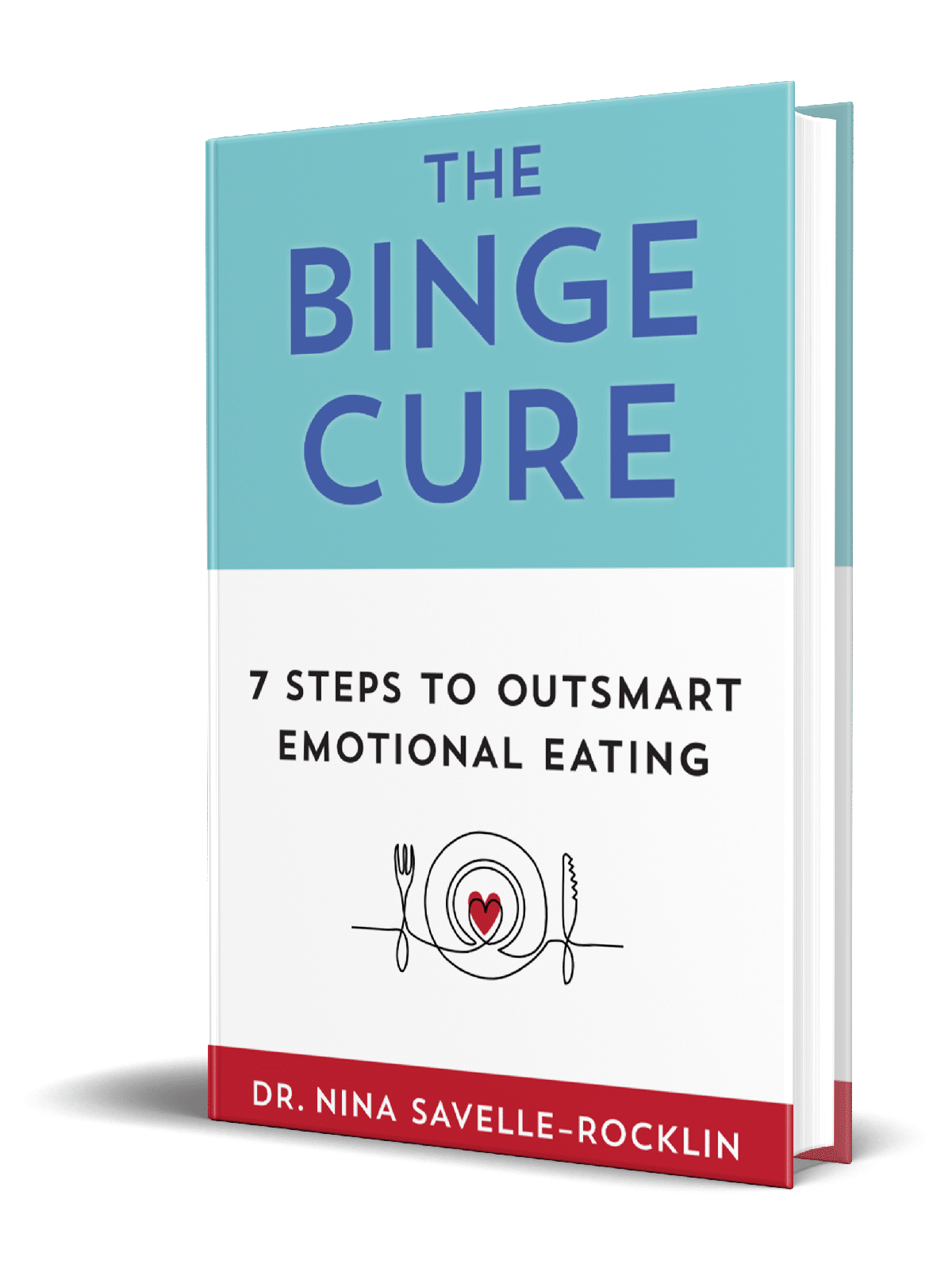
Sick of obsessing about every bite?
GET THE CURE
The Binge Cure Book!
Enter “CURE” to receive a 20% discount.
No, I don’t want access to this terrific resource to help me overcome binge eating.
The Author

Dr. Nina Savelle-Rocklin is a renowned author and podcast host and one of the nation’s leading psychoanalysts known for the psychology of eating. Her signature message of, “It’s not what you’re eating, it’s what’s eating ‘at’ you” has resonated with hundreds of thousands of listeners from around the globe in 40 countries. As founder of The Binge Cure Method, she guides emotional eaters to create lasting food freedom so they can take back control of their lives and feel good in their bodies.
Related Blogs









 Free • 3 Minutes • Personalized Results